

DAY 1 TUESDAY 17112026
Proven digital workflow
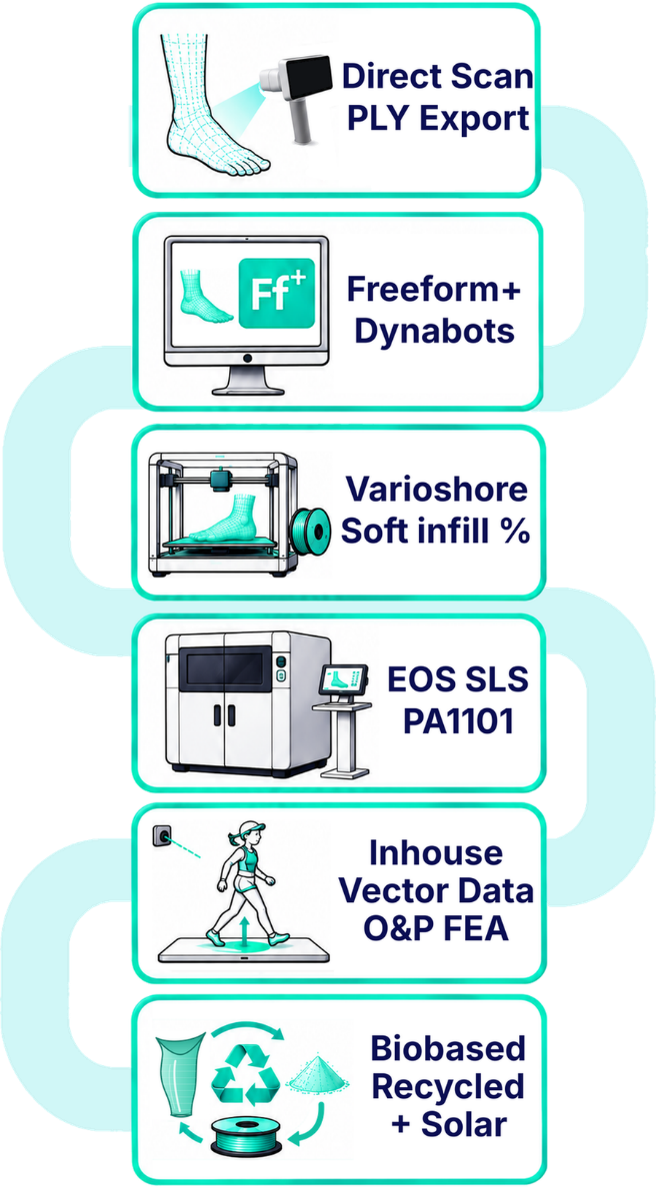
Access Orthotic’s digital workflow is a clinically led pathway that translates O&P assessment into design. This system has matured over seven years into a robust end-to-end digital workflow encompassing clinical assessment, digital capture, purposeful biomechanical design, additive manufacturing, quality assurance, and measurable client outcome evaluation.
We are interested in global connections and collaboration. Connect with us in Australia
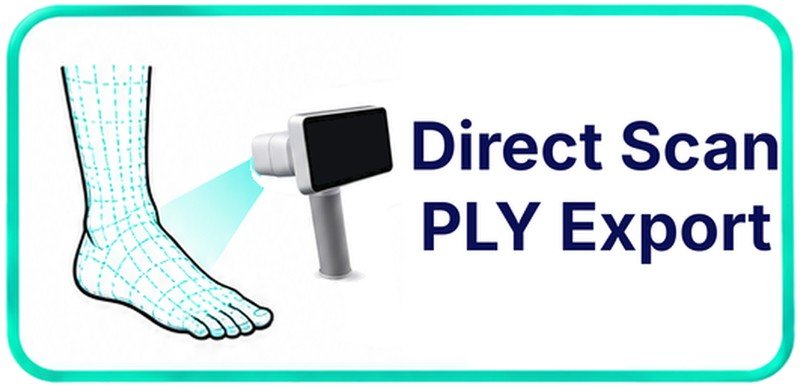
Our digital workflow begins with direct scanning of the client, capturing the shape, alignment and clinical position of the limb in real time.
We draw bony landmarks, loading areas and trimlines on the client and link the client data as a PLY export with the Enscan Medix and its mirror footstation.
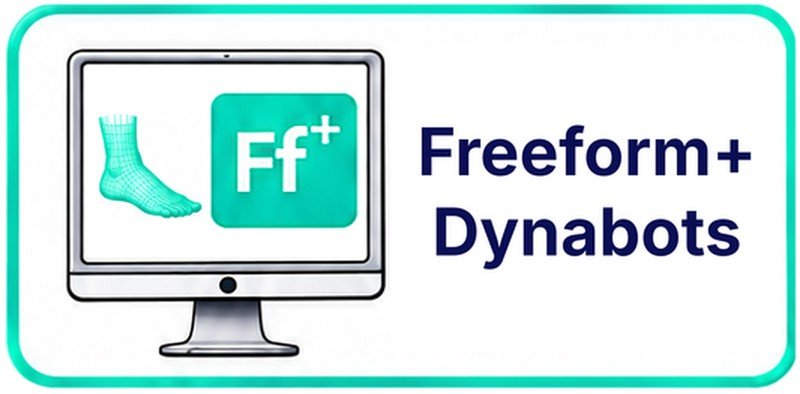
Using Geomagic Freeform with a haptic to model, enables clinicians to design loading areas, trimlines, alignment, control features and device geometry in a precise, repeatable and measurable way.
We have scripted Dynabots for our clinicians and biomedical engineers, breaking the production into prescription tasks. Freeform allows us to stay in one program from scan upload to 3mf exports.
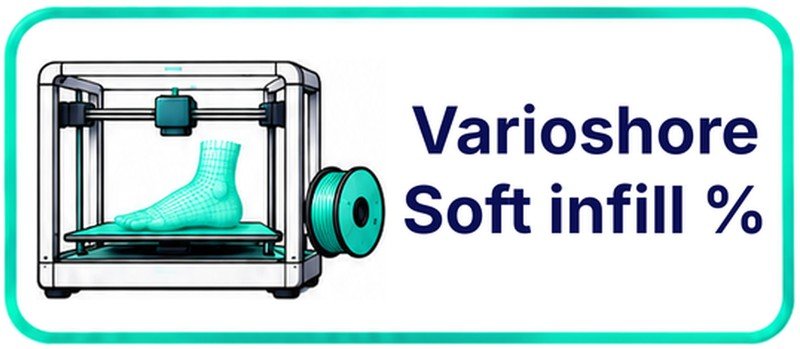
We FDM print all padding, soft componants and recycled Pa11. FDM printing allows us to produce orthotic components using controlled material and print parameters, such as wall thickness, infill, layer height matched, to support the intended clinical function.
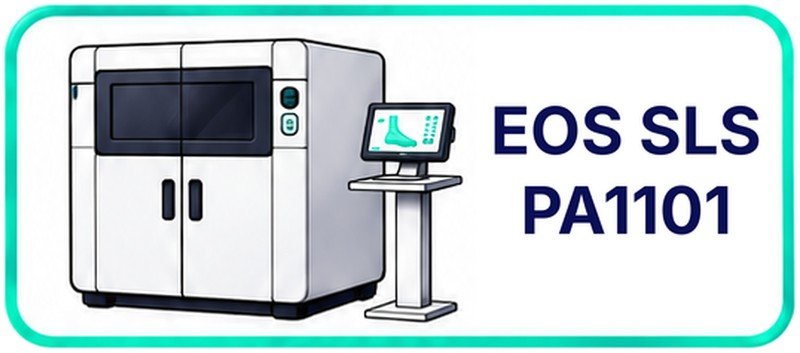
EOS 396 SLS printing in PA11 enables strong, lightweight and complex orthotic designs with integrated features such as variable thicknesses, struts, reliefs and single-material construction, expanding design possibilities beyond traditional fabrication constraints. We run two P396 within our clinic with a 99.64% client success rate over 3yrs and 1,758 devices.

Digital workflow continues beyond fabrication, with devices reviewed in use to confirm clinical outcomes. Our clinic has a BTS Bioenginering GaitLab. Vector plate analysis measures loading, gait patterns and functional change, feeding insights back into future design refinement. We have created an automated FEA pieline from client gait data to modeled and 3D printed devices.
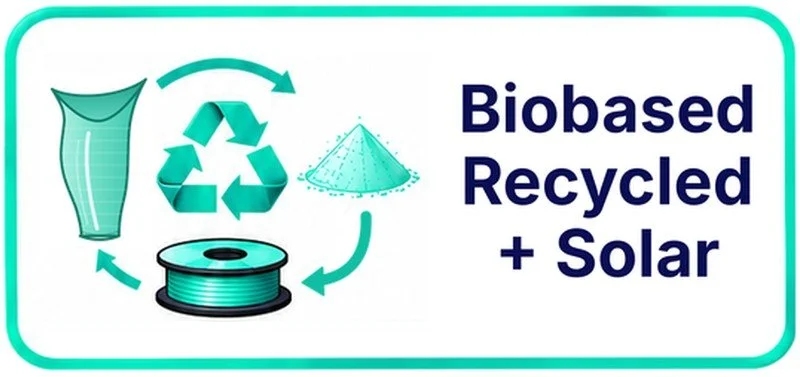
The Prosthetic and Orthotic industry is traditionally based on reductive processes which creates excessive waste materials including plaster, carbon fibre, fiberglass, epoxy resins, bogs, metals, petroleum-based plastics. Patients’ custom-made devices cannot by easily recycled due to their manufacturing methods which result in bonded mixed materials.
At Access Orthotics, we acknowledge the challenges that the O&P industry faces globally in reducing waste. We have started an internal project to recycle material resources for orthotics and prosthetics. Reduce, reuse, recycle. We have conducted a filament viability study with 3Devo in the Netherlands, to convert the waste PA11 powder into new FDM filament.
SLS 3D printing requires significant electricity. We are in sunny Australia, so have installed solar pannels and our battery storage doubles as our UPS
Over the past seven years, AO has invested extensively in the development, refinement, and validation of its 3D design and additive manufacturing pathway.
This system has matured into a robust end-to-end digital workflow encompassing clinical assessment, digital capture, purposeful biomechanical design, additive manufacturing, quality assurance, and measurable client outcome evaluation.
Developed in Australia, ready to cloaborate globally
4DAYS 4LINKS