What is 3D Scanning?
3D scanning technology has been available in Australia for more than 15 years. Basically, it is the knitting together of many digital photographs of the body – taken from many different angles. These images are aligned and processed to create a 3D digital representation of that body part. A Digital Cast.
A digital cast is extremely accurate, less wasteful, less messy, and is saved as part of your digital record. We can now track changes in alignment and shape between prescriptions.
There are different ways of capturing this digital information, as a clinic we purposefully invest in advancing 3D scanning technologies to be at the forefront of best practice. The clinicians at Access Orthotics have been utilising 3D scanning for patient care for over 12yrs.

At Access Orthotics we can chose between four different 3D scanning options.
-
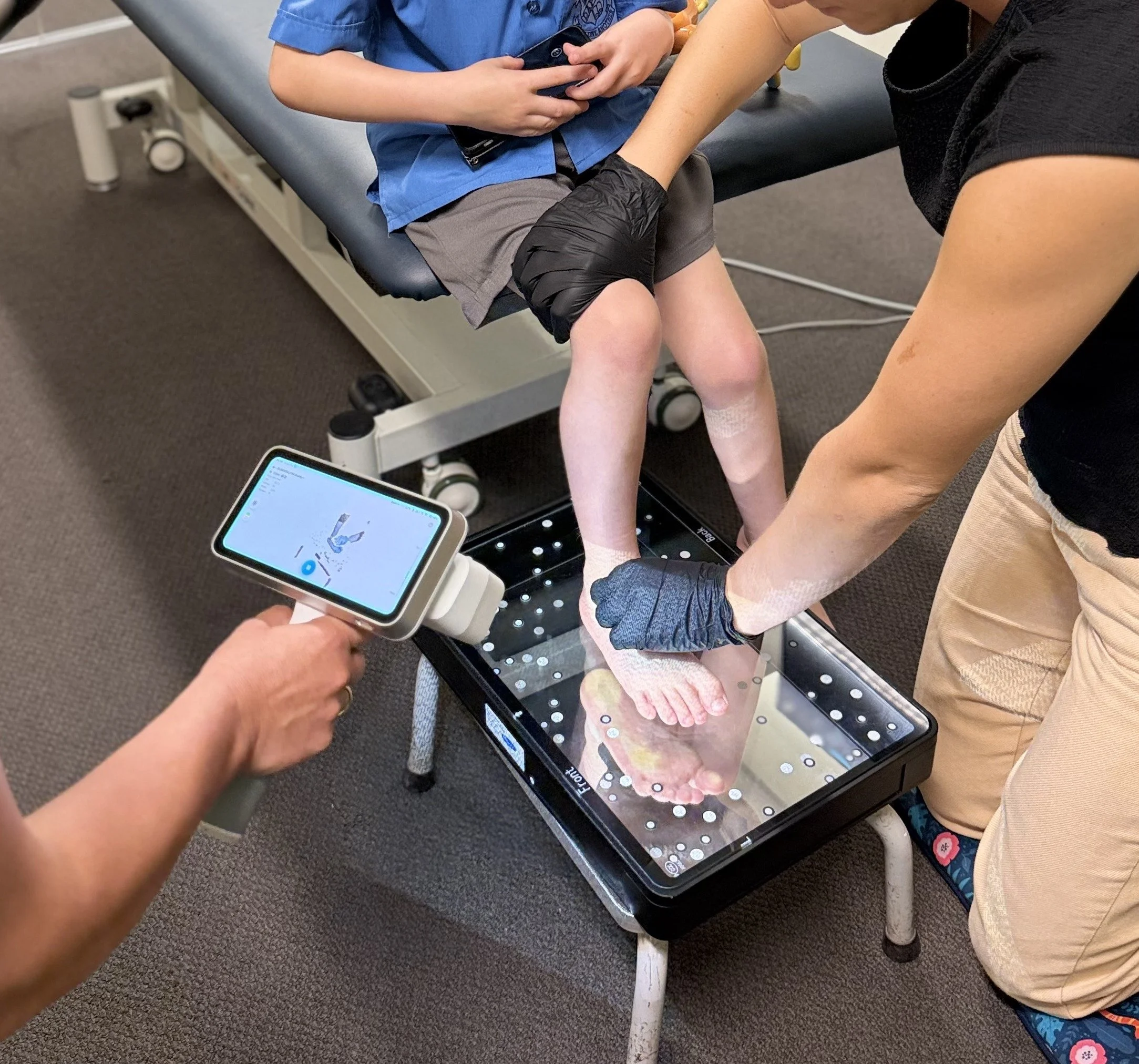
EinScan Medixa
The EinScan Medixa, purchased in 2025, is our latest medical-grade 3D scanner. Using advanced structured light technology, it captures high-resolution, full-colour digital casts in real time without the need for landmark markers. This allows for faster, more comfortable scanning while maintaining high accuracy for alignment and orthotic design.
-
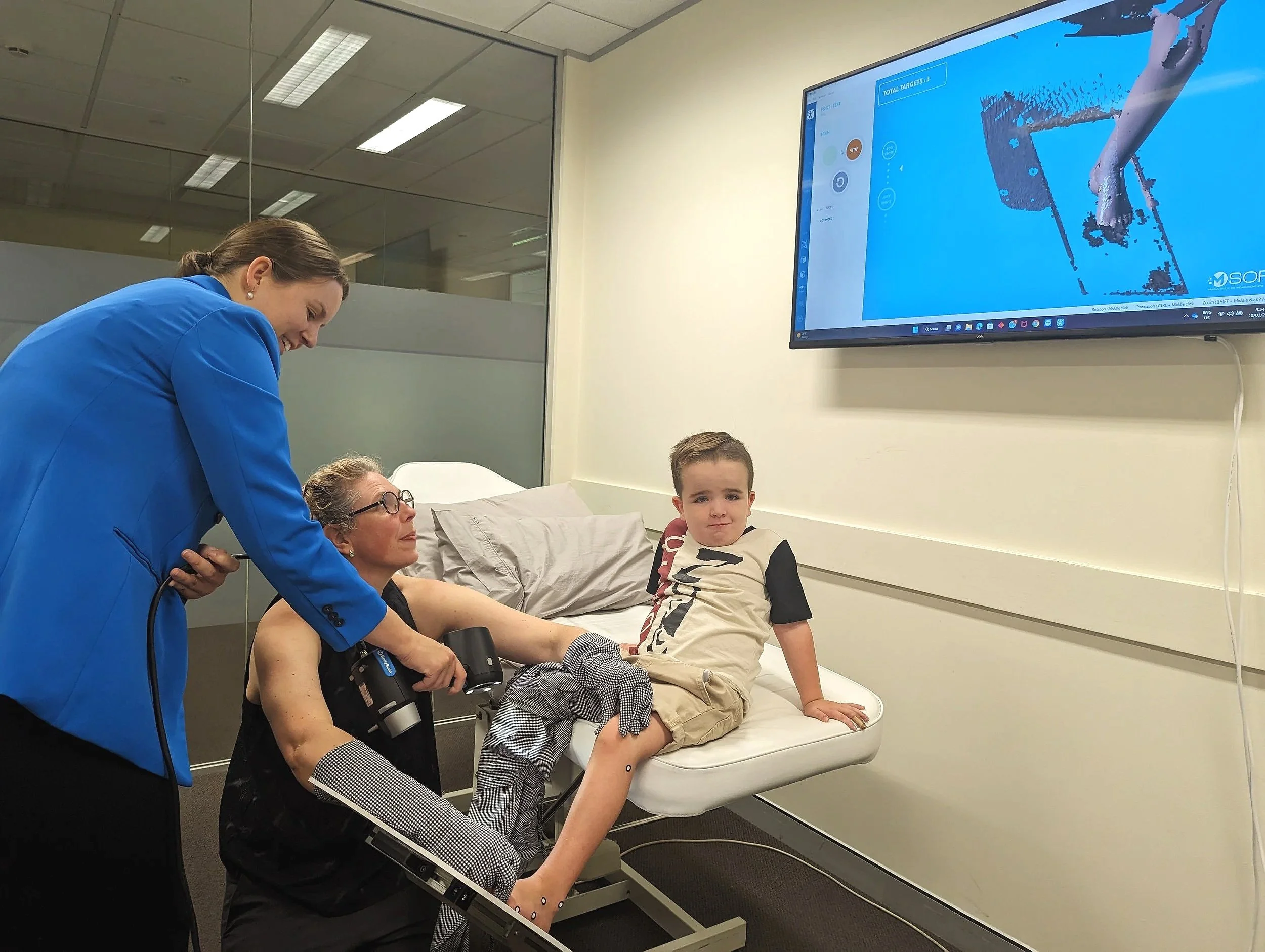
TechMed Scanner
This has been our scanner since 2022. It uses white light technology and an integrated camera. Like the EinScan Medixa, we can see the scan/cast forming in real time on the display screen and landmark stickers transfers alignment and modelling information directly to the digital cast.
-

Vorum Spectra Scanner
Our Vorum Spectra scanner was purchased in 2015. It is similar to the TechMed scanner but also transfers the overlayed photos to the digital cast, not just the landmark stickers. This feature is useful when scanning for scoliosis or over burns and other scar areas. However, the extra information obtained slows down the scanner. We have it on standby as our backup scanner these days.
-

Orthema Pressure Scanner
The Orthema was purchased in 2010 to capture digital foot casts. It measures the resistance and height of each individual pin (576 points) that raises up underneath your foot. We scan in full weight bearing and then scan again with your optimal corrected foot alignment. This allows us to map out and 3D design your custom-made foot orthotics. As your files are digital, we can track changes over time, and compare your scans.
Technology is amazing and advancing but it must be purposefully beneficial for our clients. For some clients, plaster is still the best clinical option. At Access Orthotics, we are still set up to go “old school” and get the plaster and aprons out when that is the best option for your care.
Traditionally the making of custom orthoses starts with a plaster-of-Paris cast. The cast is removed from your leg or arm or head or knee or …. and filled with liquid plaster. We then have a positive plaster version of your body part to hand calve and shape for forming an orthosis over. This is still the most common way for orthoses to be made in Australia and around the world.
There are some disadvantages to this traditional plaster process. The plaster is used once and then thrown out, this creates a lot of waste and loss of valuable information. The feel and experience of casting can also create a tonal positional response for some clients, resulting in non-optimal base alignment. Plaster casting is very messy, some patients love the process – but many don’t. We predominately 3D scan our clients.